Small Business Website vs Online Store: What's the Difference?
If you are trying to get your business online, you have probably run into this question: do you need a website, or do you need an online store? And if you are like most small business owners, you may not be entirely sure there is a difference.
There is, and it matters. The wrong choice does not just waste money. It can mean building something that does not actually do what your business needs it to do.
This guide explains the distinction clearly, covers when each option is the right choice, and helps you figure out which one or combination, fits where your business is right now.
The short answer: a business website tells people about your business. An online store lets them buy from it. Which one you need depends entirely on how your customers pay you.
What Is a Small Business Website?
A business website is a digital presence that represents your company online. Its primary job is to inform, establish credibility, and generate enquiries. Think of it as your digital front window: people can look in, see what you do, decide whether they trust you, and get in touch.
A typical small business website includes:
- A homepage that explains what you do and who you serve
- An about page with your story and team
- A services or portfolio page describing what you offer
- A contact page with a form, phone number, or booking link
- Possibly a blog for SEO and thought leadership
What a standard business website does not include is the ability to process transactions. There is no product catalogue, no shopping cart, no payment system. Customers who want to hire you or buy from you contact you through the site, and the transaction happens separately - by invoice, bank transfer, in person, or over the phone.
Who needs a business website
A business website is the right fit for:
- Service businesses - plumbers, accountants, consultants, cleaners, designers, therapists
- Local trades - builders, electricians, landscapers, mechanics
- Professional services - lawyers, mortgage brokers, financial advisors
- Creative professionals - photographers, architects, interior designers who want to show a portfolio
- Any business where the customer needs to enquire before they buy, rather than selecting from a fixed-price product list
If your business involves a conversation, a quote, or a bespoke service before money changes hands, a business website is what you need. An online store solves the wrong problem.
What Is an Online Store?
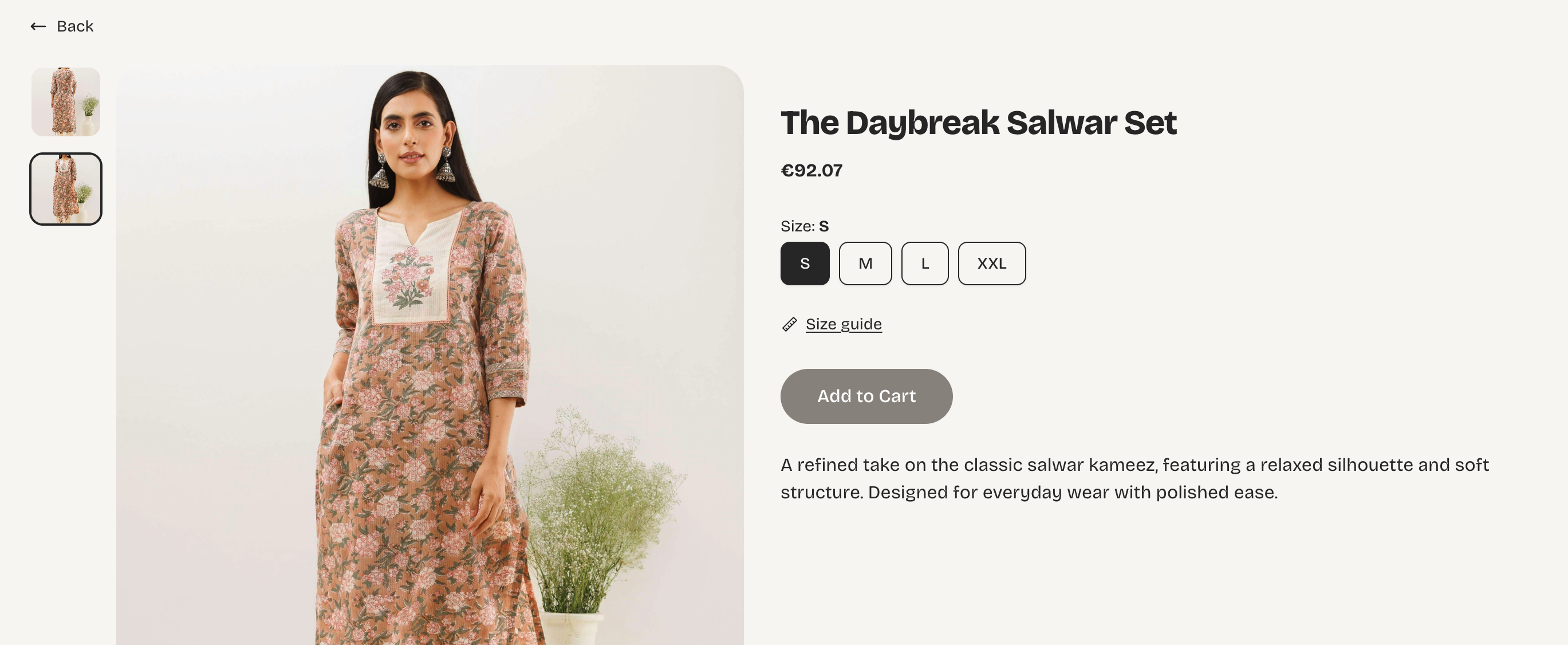
An online store is a website built specifically to sell products. It includes everything a business website has - pages, branding, content - but adds the full infrastructure needed to handle transactions: product listings, a shopping cart, payment processing, and order management.
When a customer visits your online store, they can browse your products, add items to a cart, pay immediately, and receive confirmation of their order - without any direct involvement from you. The sale happens automatically.
A typical online store includes:
- Product pages with photos, descriptions, prices, and variants (size, colour, quantity)
- A shopping cart and checkout flow
- Payment processing - card, bank transfer, or other methods
- Order management - you receive and fulfil orders through a dashboard
- Inventory tracking to manage stock levels
- Customer accounts and order history (on more advanced setups)
Who needs an online store
An online store is the right fit for:
- Makers and artisans - jewellery, ceramics, textiles, prints, candles
- Small product businesses - clothing brands, skincare lines, food producers
- Retail shops moving their existing stock online
- Anyone selling physical products at a fixed price where the customer can buy without needing a conversation first
- Creators selling digital products - downloads, templates, course materials
Side by Side: Website vs Online Store
| Business website | Online store | |
|---|---|---|
| Primary purpose | Inform and build credibility | Sell products and process orders |
| Shopping cart | Not included | Built in |
| Payment processing | Not included | Integrated |
| Product listings | Not applicable | Central feature |
| Order management | Not included | Built in |
| Contact / enquiry | Yes — forms and phone | Yes — plus direct purchase path |
| Blog or content | Common | Optional add-on |
| SEO benefit | Strong for service queries | Strong for product queries |
| Best for | Service businesses, trades, local | Product businesses, makers, retail |
Can You Have Both?
Yes - and for many small businesses, a combined approach is the right answer. An online store is essentially a website with selling capability added. Platforms like Vendroad (see vendroad.com/features) give you both in one place: professional pages to tell your story, and a fully functional store to sell your products.
This matters because buyers typically want both things. They want to be able to buy immediately if they are ready. But they also want to read about your brand, understand who made the product, and feel confident in the seller before they enter their payment details. A store with no information pages feels thin. A website with no way to buy creates unnecessary friction.
The most effective setup for most small product businesses is an online store that also tells your story -- not a business website that happens to mention you sell things.
The Grey Area: When It Is Not Obvious
Some businesses sit in between and the decision is genuinely harder. Here are the common edge cases:
Service businesses that also sell products
A massage therapist who sells skincare products. A personal trainer who sells supplements. A florist who also takes walk-in bouquet purchases. In these cases, you probably need both: a website for your services and a store for your products. Most modern platforms let you do this from a single site. Vendroad, for example, supports both product listings and informational pages from the same dashboard (see vendroad.com/templates).
Businesses that take custom orders
A custom furniture maker or a bespoke tailor cannot sell through a standard product listing because every item is different. Their business needs a website for enquiries rather than an online store. However, if they also sell a standard range alongside custom work, they may need both.
Food and hospitality businesses
A bakery that sells standard products can use an online store for those items. If they also do bespoke celebration cakes priced by consultation, that part of the business works better through an enquiry form. The two can coexist on the same site.
Businesses transitioning from offline to online
A physical retail shop moving online needs an online store - their model is already based on fixed-price product transactions. A local service provider thinking about going digital probably needs a website first, with a store added later if they develop a product range.
How to Choose the Right One
Ask yourself one question: do your customers pay you before or after a conversation?
- They pay before any conversation - they see the product, the price, and buy. You need an online store.
- They pay after a conversation, quote, or consultation - you need a business website.
- Both happen in your business - you need a platform that supports both, ideally from one place.
If you are unsure, start with the model that matches most of your current revenue. You can always add the other capability later. An online store is easy to expand into an information-rich website. A business website on the right platform can have a store added without starting over.
When choosing a platform, look for one that handles both without requiring you to manage two separate systems. Vendroad is built specifically for small businesses and makers who want a professional online store with full brand pages - no technical setup, flat monthly pricing, and no per-sale fees. Start free at vendroad.com/pricing.
Frequently Asked Questions
What is the difference between a business website and an online store?
A business website provides information about your company and generates enquiries. An online store lets customers browse products, add items to a cart, and complete a purchase immediately. An online store includes payment processing and order management that a standard business website does not.
Do I need a website or an online store for my small business?
If you sell physical or digital products at a fixed price, you need an online store. If you offer services where customers contact you before paying, you need a business website. Many businesses benefit from both - a store for products and informational pages for their brand and services.
Can an online store replace a business website?
A well-built online store can absolutely serve as your full online presence. Modern store platforms like Vendroad let you create brand pages, an about section, and a blog alongside your product listings - so your store is also your website. You do not need a separate site.
Is it expensive to build an online store?
Not necessarily. Hosted platforms like Vendroad offer flat monthly pricing with no listing fees and no technical setup required. You can start for free with up to five products and upgrade as your business grows. The cost is predictable and significantly lower than building a custom website.
What is the easiest way to get a small business online?
For product businesses, starting with a hosted online store is usually the fastest path. You can be live in under an hour with a professional storefront, product listings, and payment processing - without needing a developer. Platforms like Vendroad are built specifically for this use case.
Ready to get your business online?
Vendroad gives small businesses a professional online store and brand presence in one place - no technical setup, no listing fees, no developer needed. Start free with up to five products today.
Start at vendroad.com/features