The Solopreneur's Guide to Running an Online Store (2026)
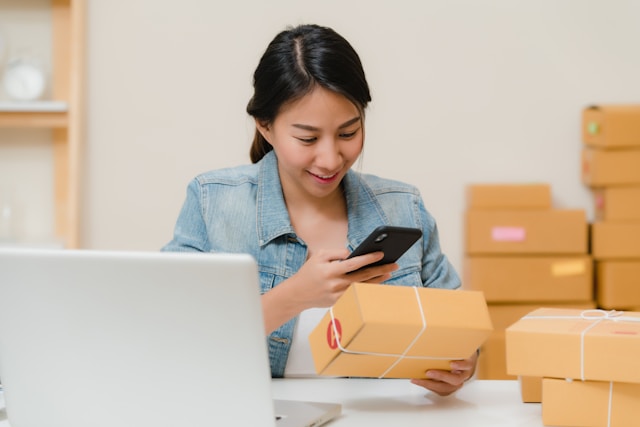
Running an online store as a solopreneur is a completely different challenge from running one with a team. You are the product photographer and the copywriter. You are the customer support and the fulfilment department. You are the marketing strategy and the person who executes it. Every hour spent on something that doesn't directly grow the business is an hour you could have spent on something that does.
This guide is written specifically for that reality. What follows is a practical playbook: how to set up your store right the first time, how to run it without drowning in admin, how to get customers without a big budget, and how to grow without losing the thing that made starting worth it.
Who this is for: Independent makers, creators, consultants selling digital products, and any one-person business that sells online. If you are building something alone and want it to work without burning out, this guide is for you.
Part 1: Setting Up Your Store the Right Way
Choose a platform that gets out of your way
The most important decision you make as a solopreneur selling online is which platform to build on. Get this right and your store runs largely on its own. Get it wrong and you spend your time managing your platform instead of your business.
The criteria are different for a solopreneur than for a larger business. You are not looking for the most powerful platform. You are looking for the one that requires the least maintenance, has honest pricing, and lets you focus on what you actually sell.
Avoid platforms with:
- Per-transaction fees on top of payment processing — these compound as your revenue grows and come out of margin you need
- Essential features locked behind paid apps — abandoned cart, discount codes, and product reviews should not require a $15/month plugin
- Annual contracts before you have proven traction — month-to-month matters when you are still finding your feet
Platforms worth considering for a solopreneur store are ones built with simplicity first, where you can go from sign-up to a live, professional store in under an hour without a developer. Vendroad is free to start (up to 5 products), with Starter at $7/month for up to 50 products. Everything: payments, shipping, discount codes, SEO, is included on this plan.
Get your store live before it's perfect
The single most expensive mistake solopreneurs make when launching an online store is waiting until it's perfect. The store is never perfect. There will always be a better product photo, a sharper description, a tweak to the colour scheme.
Launch with three to five products, professional-enough photos, and honest descriptions. You will learn more in the first two weeks of having real visitors than in two months of pre-launch preparation. A store that is live and imperfect will always outperform one that is still being refined.
What you actually need to launch:
- Store name and a logo (or just a clean text version of your name)
- Three to five products with photos and descriptions
- A payment method connected
- A shipping policy
- A way for customers to contact you
That is it. Everything else (more products, better photos, blog content, email marketing) comes after.
Set up payments properly from day one
Payment setup is the one thing you do not want to cut corners on. A checkout that doesn't work, or that customers don't trust, is the fastest way to lose the sales your marketing worked to generate.
Connect payment processors like Stripe if you can, it's the most trusted payment processor for independent stores, handles cards, Apple Pay, and Google Pay automatically, and pays out to your bank on a rolling two-day schedule. The processing rate (2.9% + $0.30 per transaction in the US) is standard across almost all platforms, the difference is whether your platform adds a second fee on top, which the better ones don't.
Also worth setting up on day one:
- Bank transfer as an alternative payment method, particularly if you sell higher-ticket items, some customers prefer it, and it costs you nothing in processing fees
- A clear refund policy — write it before you need it, not after your first return request
- Order confirmation emails — automatic, but check that they're actually arriving by placing a test order on yourself
Part 2: Running the Store Without It Running You
Build systems for the things that repeat
The work of running an online store is mostly repetitive: answer the same questions, process the same types of orders, write the same kind of product descriptions. The solopreneur who builds simple systems for these tasks early on spends far less time on operations and far more time on growth.
The three systems worth building in your first month:
An order processing routine. Decide when you fulfil orders (e.g once a day or twice a week) whatever fits your workflow, and stick to it. Tell your customers upfront (in your shipping policy) so expectations are set. A clear routine means you are not constantly interrupted by "do I need to pack something today?" and your customers know what to expect.
A customer FAQ. Write down the five questions you get asked most often and put the answers where customers can find them: on your product pages, in your store's FAQ section, or in your WhatsApp chat greeting. Every question you prevent is time you get back.
A product description template. The structure of a good product description is the same every time: what it is, what it's made of or how it's made, dimensions or sizing, what makes it worth buying, who it's for. Build a template and fill it in for each new product instead of starting from scratch.
Use WhatsApp or Crisp chat as a customer service tool
For solopreneurs, a chat widget on your store is one of the most underused features available. It converts browsers into buyers, especially for products where customers want to ask a question before committin, and it's personal in a way that an email form is not.
The key is setting a greeting that tells customers exactly what they can ask about: "Hi! Got a question about sizing, delivery, or a custom order? Message us here." This filters enquiries to useful ones and signals that there is a real person on the other end, which builds trust.
You do not need to be available 24 hours. Set a status that indicates your response hours. Most customers are happy to wait a few hours for a reply from a real person, what they do not tolerate is a message that disappears into a void.
Batch your admin, protect your creative time
The biggest time drain for solopreneurs is context-switching: going from packaging an order to answering an email to updating a product listing to writing a caption, all in the same hour. Every switch costs 15–20 minutes of refocus time.
The fix is batching: doing all tasks of the same type together, in scheduled blocks.
A practical structure for a solopreneur running an online store:
- Monday morning: Process and prepare the week's orders
- Tuesday/Wednesday: Content creation, product photos, captions, blog writing
- Thursday: Store updates, new listings, pricing changes, product edits
- Friday: Admin, emails, financials, planning next week
This won't always be clean, especially when orders spike. But having a default structure means you start each day knowing what kind of work it is, which reduces decision fatigue and protects the time you need to actually make or create.
Track the numbers that matter — and ignore the rest
Solopreneurs often either track nothing (and fly blind) or track too much (and spend hours in spreadsheets). The useful middle ground is four numbers, reviewed weekly:
- Revenue — what came in this week
- Number of orders — how many sales
- Average order value — revenue divided by orders; tells you whether people are buying more per visit over time
- Where customers came from — Instagram, Google, direct, email; tells you where to invest your marketing time
- Everything else — bounce rate, sessions, detailed demographic data — is interesting but not actionable for a one-person store at an early stage. Start with these four and add complexity only when you have a specific question the basic numbers cannot answer.
Part 3: Getting Customers Without a Big Budget
SEO is your most efficient long-term channel
Paid advertising requires ongoing budget. Social media requires ongoing posting. SEO requires upfront effort that compounds over time — a well-written product page or blog post that ranks on Google sends free traffic indefinitely.
For a solopreneur store, the SEO basics are:
Product page SEO: Every product page should have a unique title that includes what the product is and who it's for. Not just "Soy Candle" but "Hand-Poured Soy Candle — Cedar and Bergamot, 200g." The description should include the words your customer would type into Google to find it. The image should have a descriptive alt text.
Category or niche pages: If you sell multiple related products (say, all handmade ceramics) a page that specifically talks about your ceramics range, how you make them, and what makes yours worth buying will rank for category-level searches. This is the page you build once and that brings in traffic for years.
Blog content: One well-researched, genuinely useful blog post per month compounds over time into a significant source of organic traffic. The posts that rank best answer specific questions your ideal customer is searching: "how to care for handmade ceramics," "what to look for in a soy candle," "how to size a handmade ring." Write for the question, answer it fully, and link to the relevant product.
Your store platform should handle the technical side of SEO (clean URLs, fast load times, title tag and meta description fields) without you needing to manage it. If it doesn't, that's a reason to reconsider the platform.
Social media: depth over breadth
Most solopreneurs make the mistake of trying to be on every platform. The result is mediocre content everywhere and no real presence anywhere.
Pick one platform where your ideal customer actually spends time, and do it well. For most product-based solopreneurs, that is Instagram or TikTok. For makers who sell home goods, art, or jewellery, Pinterest also performs well and has the advantage of content that stays relevant for months rather than hours.
On whichever platform you choose:
- Show the work, not just the product. The making, the packing, the process.
- Be specific. "Handmade soy candle poured in my kitchen in Edinburgh" is more compelling than "small batch candles."
- Tell people where to buy. Every post that features a product should end with a clear direction to your store link.
Your bio link should go directly to your store, not a Linktree page or a general homepage. One link, one destination, one conversion opportunity. A link-in-bio store built for mobile — where the products visible in your content are the first things a visitor sees — will convert social traffic far better than a general homepage.
Email: small list, high return
Email is the most efficient marketing channel for solopreneurs because the people on your list have already opted in. They know who you are. They want to hear from you. A list of 500 engaged past customers will generate more revenue per message than 5,000 Instagram followers who discovered you last week.
Build your list from the beginning:
- Every order adds the customer's email to your list — with their permission, through a clear opt-in at checkout
- Your bio link store should have a visible email signup for people who want to be notified of new products before they're ready to buy
- Occasional "first to know" content — new collection launches, limited edition drops, restock alerts — gives people a reason to stay subscribed
You do not need complex email automation to start. A monthly update — what is new, what is back in stock, what is coming — is enough to keep your list warm and your revenue consistent between social media spikes.
Word of mouth and repeat buyers
For a solopreneur, the customer who buys twice is worth five times the customer who buys once. Repeat buyers cost nothing to acquire, buy with less hesitation, and tell other people.
Three things that meaningfully increase repeat purchases:
- Include a personal note or card with every order — even a simple printed card with your name and store URL. It makes the transaction feel personal and gives the customer something to keep and reference.
- Email your past customers first when you launch something new. They already trust you. Make them feel like insiders.
- Respond personally to reviews and DMs. People who feel noticed come back. It takes two minutes and it compounds.
Part 4: Growing Without Losing What Makes It Worth It
Know the difference between growth and scale
Not every solopreneur wants to hire a team and build a company. Some do, and that is a completely valid goal. But a lot of solopreneurs are building a business that gives them freedom, creative control, and a livable income — not one that needs to become a brand with employees.
Knowing which you want changes every decision: what you price, what you make, how much you invest in growth, when you say no to something.
If you are building for freedom and income rather than scale:
- Price to account for your time fully. Many solopreneurs underprice because they are only costing materials. Your time is a real input. Price it.
- Cap your product range deliberately. More products means more inventory, more photography, more listings to maintain. A focused range of ten to fifteen great products will outperform fifty mediocre ones.
- Protect your making time. The reason customers buy from you — not from a factory or a marketplace — is because you made it. The moment making gets squeezed out by admin and marketing, the thing that made your store worth visiting starts to erode.
When to get help (and what kind)
There is a point for most solopreneurs where hiring is the right move, but the right first hire is almost never a full-time employee. It is usually one of:
- A part-time VA for order processing, customer emails, and scheduling, the tasks that repeat and don't require your specific skills
- A photographer for a single shoot that generates months of product imagery
- An accountant for annual tax preparation, not ongoing bookkeeping, just the part that is most likely to cost you money if you do it wrong
The test for whether to hire for something: if the task takes more than three hours of your time per week and doesn't require your specific expertise, it is worth paying someone else to do it.
Build your own audience, not a platform's
The most dangerous position for a solopreneur is being entirely dependent on a single platform — whether that is Etsy, Instagram, or a marketplace — for all of your customers. Platforms change their algorithms, increase their fees, and make decisions that can cut your visibility overnight with no warning.
The assets that belong to you regardless of what any platform does:
- Your email list — no algorithm, no fee, no risk of being de-platformed
- Your own store — traffic that comes to your domain compounds into SEO authority that belongs to you, not to a marketplace
- Your customer relationships — the people who have bought from you directly and know your name
Building these takes longer than simply listing on Etsy or posting on Instagram. But the compounding effect of owned channels (where each customer, each subscriber, each page that ranks on Google adds to something that is permanently yours) is what separates solopreneurs who are still thriving in five years from those who are constantly chasing the next platform.
The Solopreneur Store Checklist
Use this to audit where you are and what to work on next.
Foundation
- Store is live with at least three products
- Payments connected and tested (including a real test order)
- Shipping policy is clear and accurate
- Customers can contact you easily (Chat widget, email, or both)
- Store looks professional on mobile
Operations
- Order processing routine is set and communicated to customers
- FAQ covers the five most common questions
- Product description template built and in use
- Customer email list is being collected from every order
Marketing
- Bio link goes directly to your store (not a Linktree)
- Active on one social platform consistently
- At least one piece of SEO content published (product page or blog post)
- Repeat customers receive a personal note or card with their order
Growth
- Revenue tracked weekly
- Pricing accounts fully for your time
- Product range is focused and manageable
- No more than one platform dependence for customer acquisition
Frequently Asked Questions
What is a solopreneur? A solopreneur is someone who runs a business entirely on their own, without co-founders, employees, or partners. The term is distinct from "freelancer" in that a solopreneur typically builds a product or scalable business rather than selling time-for-money services. Most solopreneurs run lean: low overhead, high ownership, and complete control over their work.
What is the best online store platform for solopreneurs? The best platform for a solopreneur is one that is fast to set up, honest about its costs, includes essential features without requiring paid apps, and stays out of your way so you can focus on your products and customers. Vendroad is built with this in mind — free to start, $7/month for 50 products, with payments, shipping, discount codes, SEO, and WhatsApp chat all included.
Do I need a business registered before I can start selling online? Requirements vary by country and by how much you sell. In most places, you can start selling as a sole trader before formally registering a business. Once you are generating consistent revenue, it is worth speaking to an accountant about the right structure for your situation. Do not let registration complexity stop you from starting.
How many products do I need to launch? Three to five is enough. More than that is ideal but not required on day one. What matters is that the products you do have are well-photographed, clearly described, and competitively priced. A focused store with five great products will outperform a sprawling store with 50 mediocre ones almost every time.
How do I get my first sales without an audience? Tell everyone you know. Post about it on your personal social accounts before your brand account has any followers. Send a direct message to anyone who might be interested or might know someone who is. List on a secondary channel like Etsy for early discovery while building your own store for the long term. Your first ten customers will almost always come from your existing network, the audience comes after.
When should I start paying for advertising? Paid advertising works best when you already have data: a product that sells organically, a landing page that converts, an audience you can describe precisely. Running ads before you have any of this is expensive and rarely efficient. Start with organic channels, prove that people want what you sell, then use advertising to amplify what is already working.
Ready to set up your store? Start free on Vendroad — up to 5 products, no credit card, live in under an hour.