How to Sell Online in Nigeria With Your Own Branded Store
You've put in the work. You have products worth selling. You've even started getting orders through WhatsApp and Instagram DMs, which is great. But somewhere in the back of your mind, a question keeps surfacing: is there a better way to do this?
There's never a downside to building your own brand
Some sellers turn to Jumia or Konga at this point. And on the surface, it makes sense: huge audiences, built-in logistics, easy to get started. But there's a cost that doesn't show up in the commission percentage. It shows up six months later, when you realise you've been building their business, not yours.
This article is for Nigerian sellers who want to grow online on their own terms, with a branded store, their own customers, and full control over how their business runs.
Fun fact: Nigeria's e-commerce market is one of the fastest growing in Africa, projected to reach $18.68 billion by 2031. The opportunity is real. The question is whether you build it on your platform or someone else's.
What Selling on Jumia Actually Costs You
Jumia is genuinely impressive. Over 81 million monthly visits, logistics networks across the country, millions of active buyers. If you list on Jumia, people will find your products. That part is real.
But here is what happens when a buyer purchases your product on Jumia:
- They buy from Jumia, not from you
- Jumia keeps the customer's email address, phone number, and purchase history
- If that buyer wants to order again, they go back to Jumia and may find your competitor first
- If Jumia changes its algorithm, suspends your account, or raises its fees — your business stops
Konga operates similarly, charging 5-18% commission per sale, with the platform retaining the buyer relationship throughout. You fulfil the order. They keep the customer.
This is not a criticism of those platforms. They serve a purpose. But if your goal is to build a sustainable business with a real brand behind it, you cannot do that when someone else owns your customers.
The real cost of selling on a marketplace is not the commission percentage. It is the customer relationship you never get to build.
What You Get With Your Own Online Store
When you sell through your own branded store, the dynamic reverses completely. Every sale builds something that belongs to you.
Here is how the two approaches compare:
| Selling on Jumia / Konga | Your Own Vendroad Store | |
|---|---|---|
| Your brand visibility | Buried among thousands of competitors | Your own storefront, your own name |
| Who owns the customer | The marketplace does | You do, always |
| Customer data | You never see it | Full access: emails, orders, behaviour |
| Repeat business | Buyer returns to Jumia, not you | Buyer returns to your store |
| Pricing control | Pressure to match cheapest listing | You set your price, your terms |
| Account risk | Can be suspended at any time | You control your store |
| Brand building | Builds Jumia's brand | Builds your brand |
| WhatsApp integration | None | Built in, chat directly with buyers |
The difference is compounding. Every order on Jumia makes Jumia stronger. Every order on your own store makes your brand stronger.
How to Set Up Your Own Nigerian Online Store
The good news is that setting up your own store no longer requires a developer, a big budget, or weeks of setup time. Here is how to get started:
Step 1: Choose a store builder designed for Nigerian sellers
You need a platform that understands the Nigerian market, one that supports bank transfers, makes it easy for buyers to pay however they prefer (see vendroad.com/features), and works well on mobile. Vendroad is built for exactly this: simple to set up, no coding required, and designed for vendors, creators, and small businesses who want a store that looks professional from day one.
Step 2: Build your branded storefront
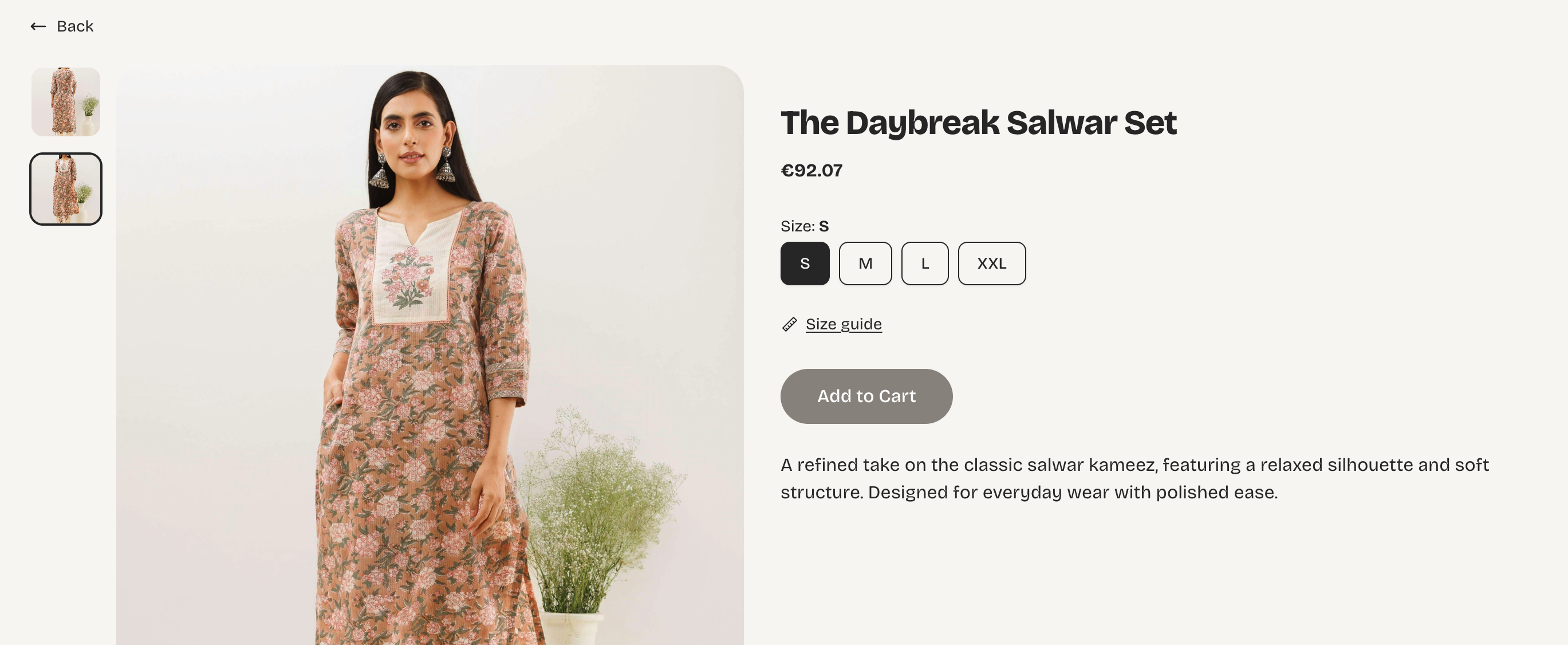
Pick a theme that matches your brand's feel (see vendroad.com/templates). Change the colours and fonts to match how you present yourself on Instagram. Add your logo. The whole process takes less than 30 minutes, and you end up with a store that looks like yours, not a template anyone could have.
Step 3: Add your products
For each product, add:
- A clear product name and description
- 2–4 photos (natural light, clean background, your phone camera is more than enough)
- Your price in Naira
- Any variations: sizes, colours, quantities
Take time with your descriptions. Lead with what makes the product special, not just what it is. "Handmade from Aso-Oke fabric, no two are identical" tells a story. "Handmade fabric bag" does not.
Step 4: Set up payments
Vendroad supports direct bank transfer and accepting international payments for Nigerian stores, so your buyers can pay however works for them.
Step 5: Connect WhatsApp
This is where Vendroad becomes particularly useful for Nigerian sellers. The built-in WhatsApp chat means buyers can message you directly from your store (see vendroad.com/features) no need to hunt for your number on Instagram. It keeps the personal connection that Nigerian commerce runs on, while routing it through a professional storefront instead of your DMs.
Step 6: Share your store link
Put your store URL in your Instagram bio, your WhatsApp status, your Facebook page, and anywhere else your customers already follow you. Your first sales will almost certainly come from people who already know you, bring them to your store and let the experience do the rest.
What About Buyers Who Only Shop on Jumia?
This is a fair concern. Jumia has millions of loyal shoppers who may never think to buy from a standalone store. Here is the honest answer: that audience is real, and you do not have to choose one or the other.
Many successful Nigerian sellers use Jumia or Konga for discovery, to reach new buyers they would never find otherwise while driving repeat customers to their own store where margins are higher and relationships are stronger.
Think of the marketplace as a customer acquisition channel. Think of your own store as where your business actually lives.
Strategy tip: Use Jumia to get found. Include a card or note in every Jumia order that directs buyers to your own store for future purchases, exclusive products, or a loyalty discount. Over time, you migrate your best customers to a platform you own.
Common Worries Nigerian Sellers Have About Own Stores
"Will buyers trust a store they've never heard of?"
Trust is the biggest barrier in Nigerian e-commerce and it is valid. Buyers have been burned before. Here is what builds trust fast on your own store: real product photos (not stock images), a visible WhatsApp number, customer reviews displayed prominently, and a clear payment and delivery policy. These signals matter more than the platform name in the URL.
"What if I do not get enough traffic?"
Your store does not need to out-traffic Jumia. It needs to convert the traffic you already have: your Instagram followers, your WhatsApp contacts, the people who already trust you. That is a much smaller number, but a far warmer audience. Most sellers who launch their own store are surprised by how well their existing network converts.
"Is it expensive to maintain?"
Vendroad's pricing is transparent and designed for small businesses (see vendroad.com/pricing). You can start with a free plan to test the concept, then upgrade as your business grows.
Frequently Asked Questions
Can I sell online in Nigeria without using Jumia or Konga?
Absolutely. Platforms like Vendroad let you create a fully branded online store (see vendroad.com) in under an hour — no coding required. You handle your own products, payments, and customer relationships directly, without listing on a marketplace or paying per-sale commissions to a third party.
How do Nigerian buyers pay on an independent online store?
The most common options are bank transfer, USSD, and card payment. Vendroad supports all of these, so you can accommodate however your customers prefer to pay.
Do I need a CAC registration to start an online store in Nigeria?
No, you can launch and start selling without CAC registration. Many sellers begin trading first and register later once the business is growing. That said, registration does build credibility with buyers who look for legitimate businesses, so it is worth planning for as you scale.
What is the best way to get my first customers to my own store?
Start with the people who already trust you. Send your store link to your WhatsApp contacts and existing customers. Post your store launch on Instagram. Direct your Jumia or Konga buyers to your own store for repeat purchases. Your warmest audience is always the first place to start.
Can I run my own store and still sell on Jumia at the same time?
Yes and many successful Nigerian sellers do exactly this. Use Jumia for new customer discovery and your own store for building long-term customer relationships. Over time, as trust in your brand grows, the balance naturally shifts toward your own store where you keep more of the value you create.
Ready to build a store that belongs to you?
Vendroad is built for Nigerian sellers who want a professional branded store, with WhatsApp integration, payment support, and no technical skills required. Start for free today..
Start your store at vendroad.com →